
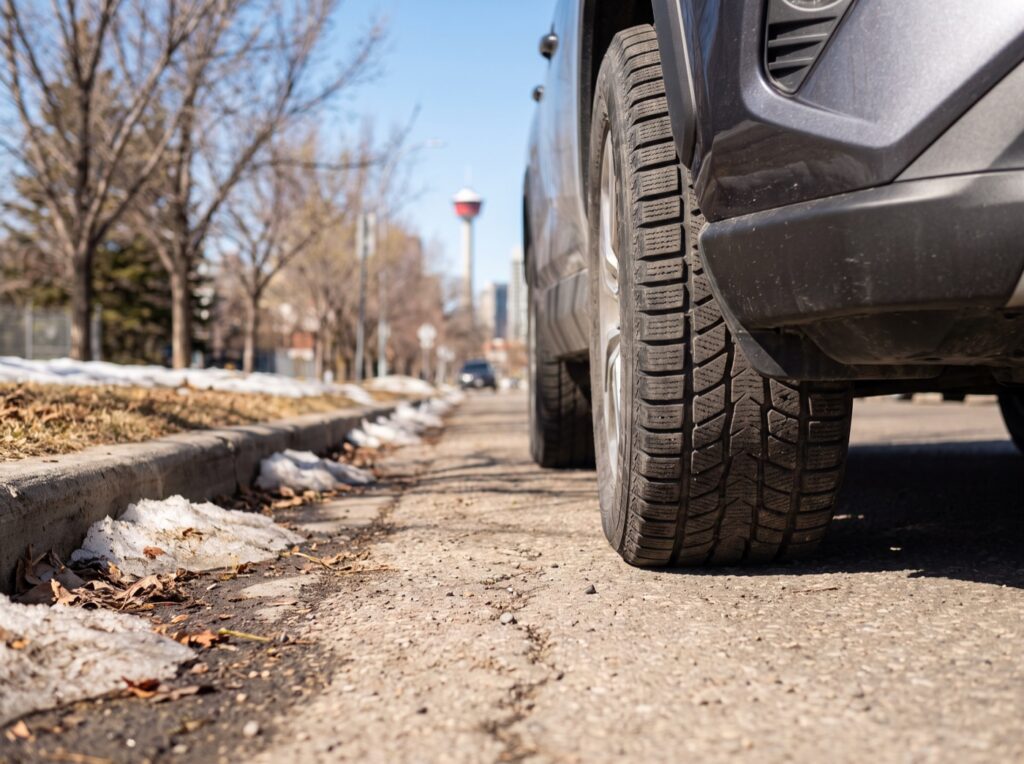
Spring is here, so it is time to book your tire changeover.
Leaving winter tires on into the warm months costs more than most people think. Here is why, and how to tell how much life your winter set has left.
Why winter tires wear fast in warm weather
Winter tires are made with a softer rubber compound. On warm pavement that softer rubber wears down much faster, so every week on winter tires in spring and summer uses up tread you will want next winter.
The tread design adds to it. Winter tires have deep tread blocks cut with many small slits, called sipes, that bite into snow and ice. On warm, dry pavement those blocks flex and squirm, which builds heat and scrubs rubber away even faster.
It is not only about wear
On warm, dry roads, winter tires also give up some of the grip and steering feel of all-season or summer tires. Stopping distances can be longer, and the car can feel vague in a quick lane change. The rubber is built for the cold, and in the heat it does not hold the road as well.
What lost tread costs you
A winter tire’s grip on snow and slush comes from its tread depth. As it wears, the grooves and sipes get shallower and it clears less snow. A set that could have lasted several winters may need replacing a season or two early if it spends its summers on hot pavement.
Signs your winter tires are done
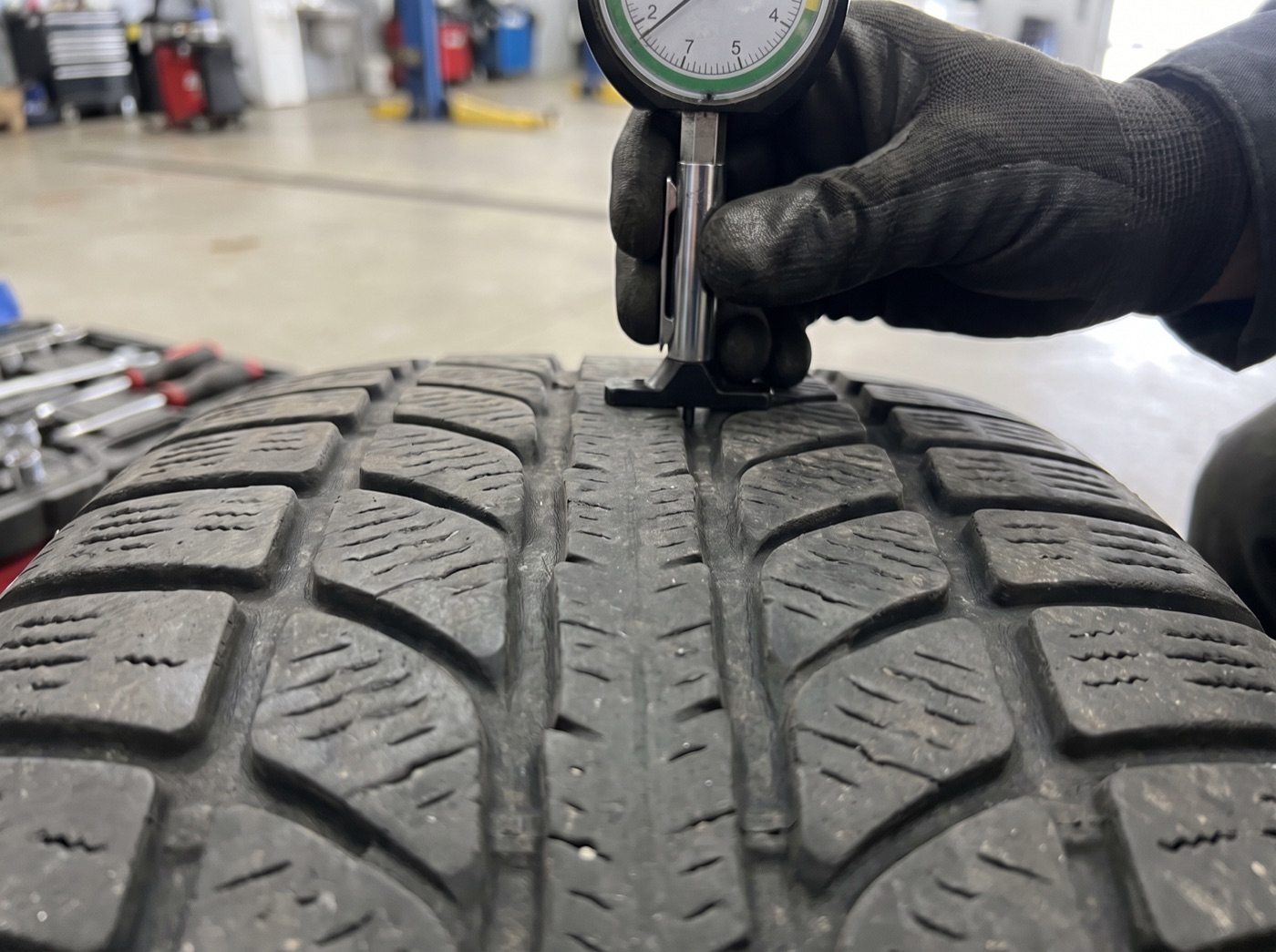
- Wear bars. When the tread is level with the wear bars in the grooves, the tire is at 2/32 of an inch (1.6 mm) and needs to be replaced.
- Winter wear indicators. Some winter tires have a second set of indicators that shows when the tread is too shallow for snow, even though the tire is not fully worn.
- Age. Rubber hardens as it ages and loses grip in the cold. Many tire makers suggest a yearly check once a tire is five years old. The DOT code on the sidewall shows when it was made.
- Damage. Cracks, bulges, cuts or a repair close to the sidewall are reasons to have a tire looked at before it goes back on.
Reading the wear pattern
How a tire wears tells you something about the car:
- Wear down the centre of the tread usually means the tire has been over-inflated.
- Wear on both outer edges usually means it has been under-inflated.
- Wear on one edge often points to a wheel alignment problem.
- A scalloped or cupped pattern can point to worn suspension parts or a tire that is out of balance.
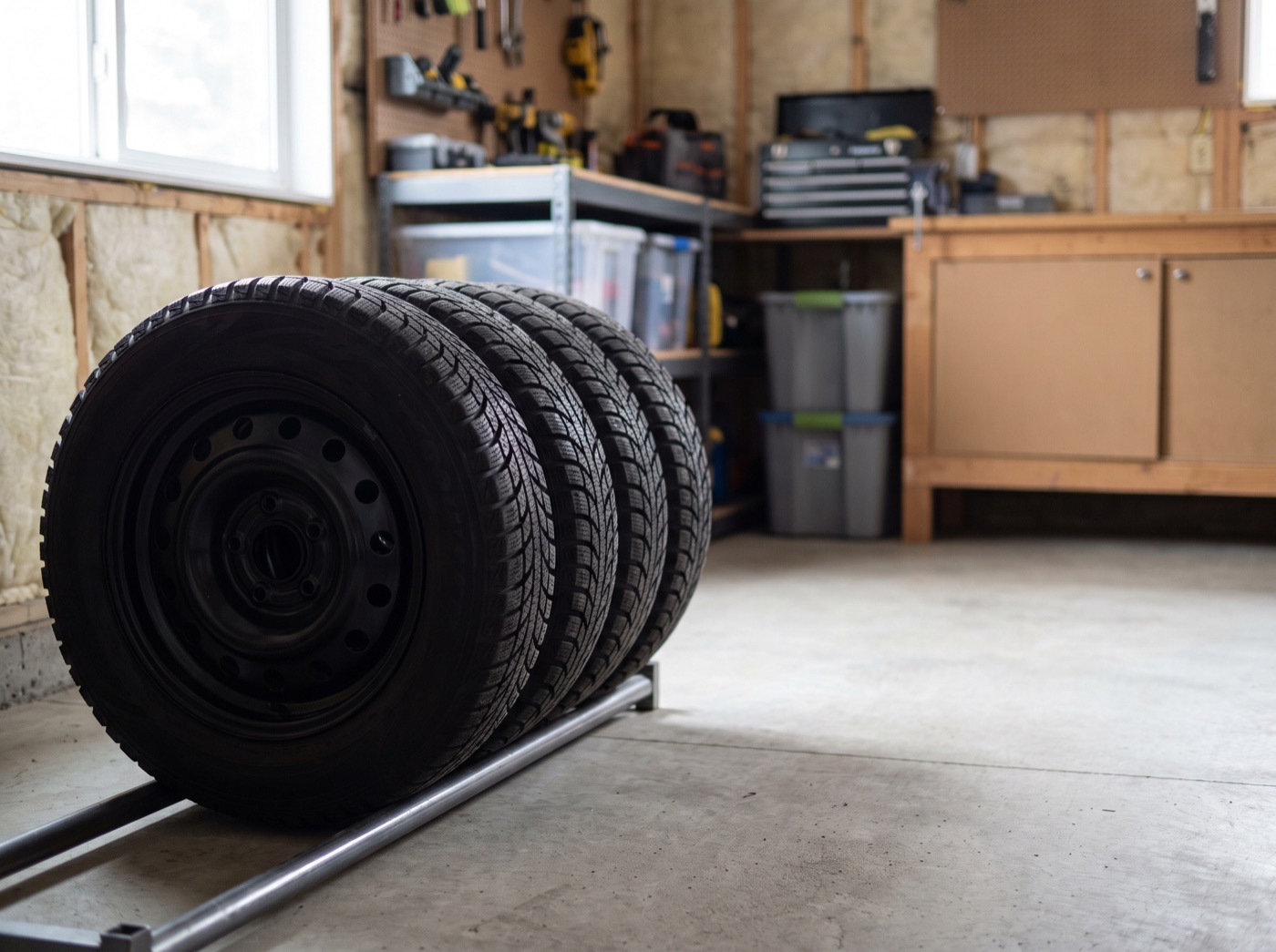
Save your winter tread
Do not put off the switch. Call (403) 283-5015 or book online to have your summer tires put on.
A changeover is also a good time to look at how your tires are wearing. Uneven wear can point to a wheel alignment problem, and a tire rotation helps all four wear evenly.
Check your tire pressure again a week or two after the changeover. Pressure changes with temperature, and spring days in Calgary swing a lot.
Need this done?
Tell us what the car is doing. We quote before any work starts.
Phone
Hours
Monday to Friday, 8 am to 5 pm
Address
Bay 1, 1381 Hastings Crescent SE, Calgary, AB T2G 4C8
Drivers come to us from Calgary, Airdrie and Okotoks. We work on domestic and import makes.
Book your service.
Call (403) 283-5015 or book online. We quote before any work starts.