
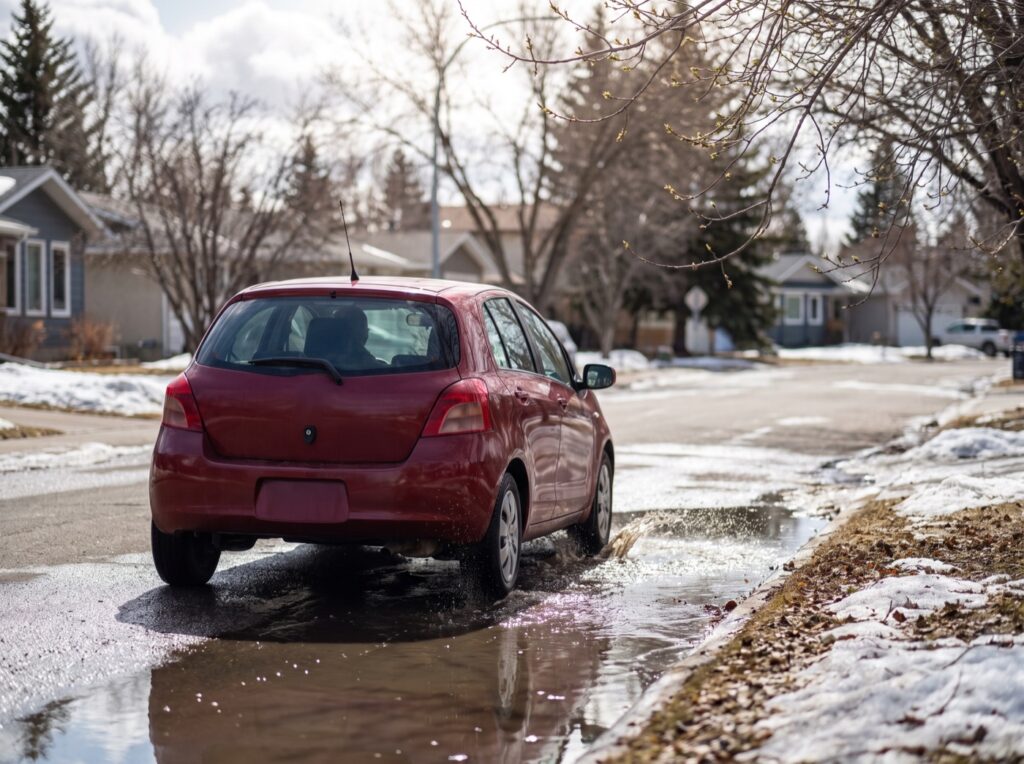
Spring is on the way, which makes now a good time to plan your switch from winter tires to summer tires.
Winter tires start to wear much faster once temperatures climb above 7°C. Booking ahead means you are not stuck looking for an opening at the last minute.
The 7°C rule
Winter tires use a soft rubber compound that stays flexible in the cold. That is what gives them grip on snow, ice and frozen pavement. Above about 7°C the same rubber gets too soft. It wears faster, and the car feels less precise when you steer and brake.
All-season and summer tires work the other way around. Their rubber is firmer, so it grips better and lasts longer once the weather warms up, but it hardens and loses grip in the cold.
The rule of thumb is to switch when the temperature stays above 7°C most of the time, not after one warm afternoon.
Why the timing is tricky in Calgary
Calgary weather makes that call harder than in most places. A chinook can push the temperature well above 7°C in the middle of winter, and snow can still fall in April and May.
A simple way to time it:
- Watch the forecast for a stretch where daytime highs stay above 7°C and overnight lows are mostly above freezing.
- Book your changeover a week or two ahead, so the appointment lands when that stretch starts.
- If a late storm hits after the switch, drive less, slow down and leave more space. All-season and summer tires lose a lot of grip on snow and ice.
All-season or summer tires?
Most drivers put all-season tires on for spring, summer and fall. They suit Calgary’s mix of warm days and cool nights.
True summer tires give the most grip on warm pavement, wet or dry, but they are not made for the cold. If you run summer tires, plan to switch back to winter tires early in the fall.
Check your tires before they go on
Before your warm-weather tires go back on, give them a quick look:
- Tread depth. Every tire has small wear bars moulded into the grooves. When the tread is worn down level with those bars, the tire is at 2/32 of an inch (1.6 mm) and needs to be replaced.
- Damage. Look for cracks in the sidewall, bulges, cuts, and nails or screws in the tread.
- Uneven wear. Wear on one edge, or a cupped pattern, can point to an alignment or suspension problem.
- Age. Rubber hardens over time, even on a tire with plenty of tread left. The last four digits of the DOT code on the sidewall show the week and year the tire was made.
- Pressure. Set the pressure to the number on the sticker inside the driver’s door, not the maximum printed on the tire, and check it when the tires are cold.
Storing your winter tires
How you store winter tires over the summer affects how long they last.
- Clean them before they go into storage, so road salt and grime do not sit on the rubber all summer.
- Keep them somewhere cool, dry and dark. Sunlight and heat break rubber down.
- Keep them away from furnaces, water heaters and electric motors, which give off ozone that cracks rubber.
- Tires on rims can be stacked flat or hung. Tires without rims are best stored upright and turned now and then.
- Mark where each tire came off (front left, rear right and so on), so they can be rotated when they go back on in the fall.
Book before the rush
Call (403) 283-5015 or book online to reserve a time for your tire changeover. If your tires are wearing unevenly, ask about a tire rotation or a wheel alignment at the same visit.
After a winter of salt, cold starts and potholes, spring is also a good time for a vehicle inspection. We quote before any work starts.
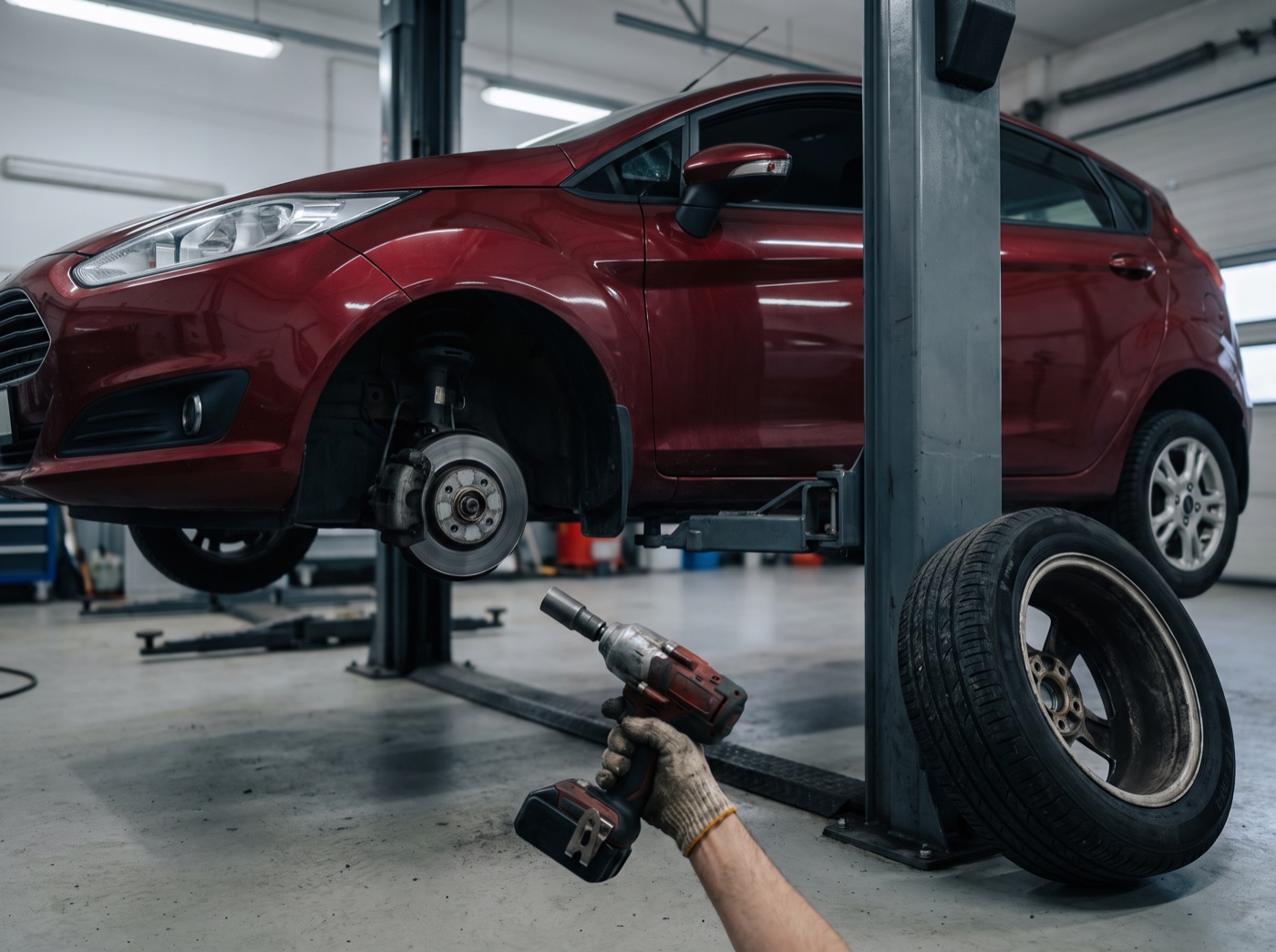
Need this done?
Tell us what the car is doing. We quote before any work starts.
Phone
Hours
Monday to Friday, 8 am to 5 pm
Address
Bay 1, 1381 Hastings Crescent SE, Calgary, AB T2G 4C8
Drivers come to us from Calgary, Airdrie and Okotoks. We work on domestic and import makes.
Book your service.
Call (403) 283-5015 or book online. We quote before any work starts.